
Tabular Playground Series
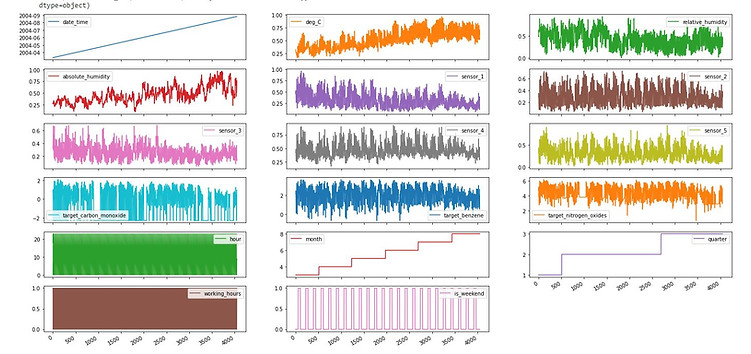
Air Quality forecasting includes 3 different types of output: Carbon Monoxide, Benzene, and Nitrogen Oxides. Approaching the problems, I've developed a Neural Networks using LSTMs and 1D Convolution in Tensorflow and Keras.
01
Feature Engineering
With the initial 9 different types of data, I've engineered new features (time -> quarter, working hours), which improve the accuracy of the model by almost 50%, from 1.74 RMSLE to 0.81 RMSLE (Root Mean Square Logarithmic Error)
02
Data Scaling and Normalization
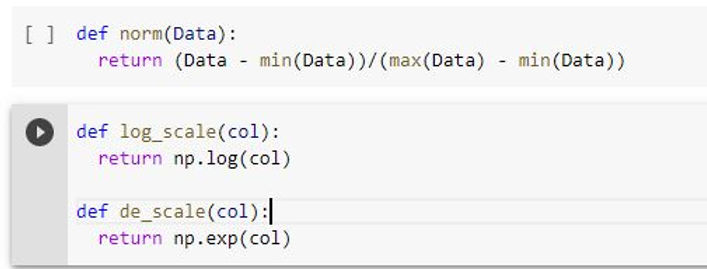
I'm using both log transformation and min-max scaler, in which log transformation for target output to reduce the outliers, and min-max for inputs data so that the data will lie in the range from [0;1]
03
Metrics
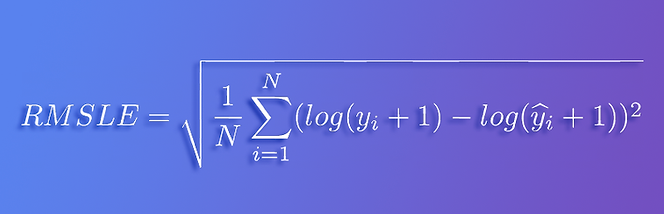
When configuring the model, I'm using a custom metrics, RMSLE (Root Mean Square Logarithmic Error)
05
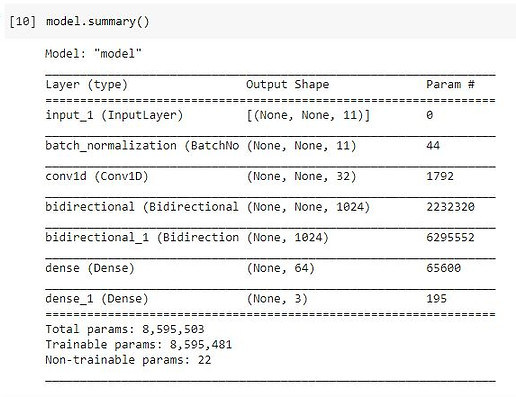
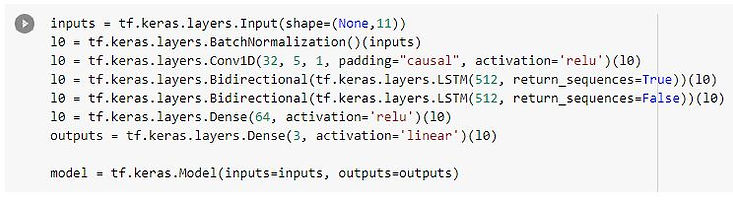
Model Architecture and prediction output
My model has been built using Tensorflow.Keras.Model - And output is 3 linear Neural Network nodes
04
Model Input
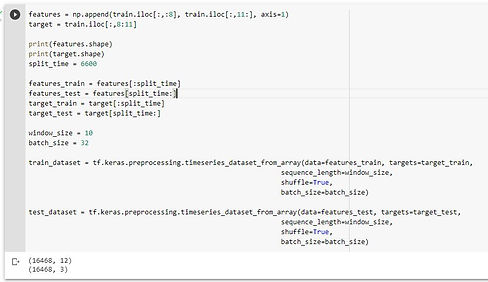
The input for the model is a window size of 10, batch size = 32.
06
Result after 200 epochs
Eventhough the result is not having a high RMSLE score, I believe it's because the model is not trying to learn the remaining graph, in which other 2 air properties it did very impresive.
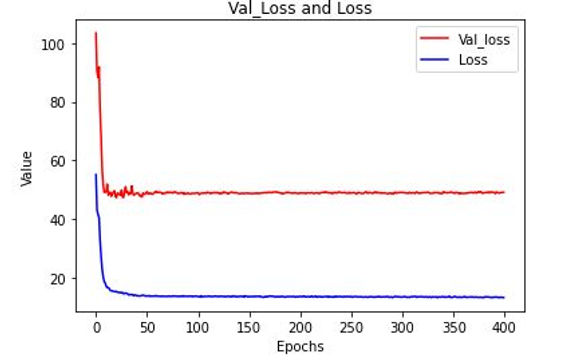
Val_loss and loss graph after 200 epochs